
Blog
How to Bring the Mounts Botanical Garden Look Home: A Florida Gardener’s Step-by-Step Guide
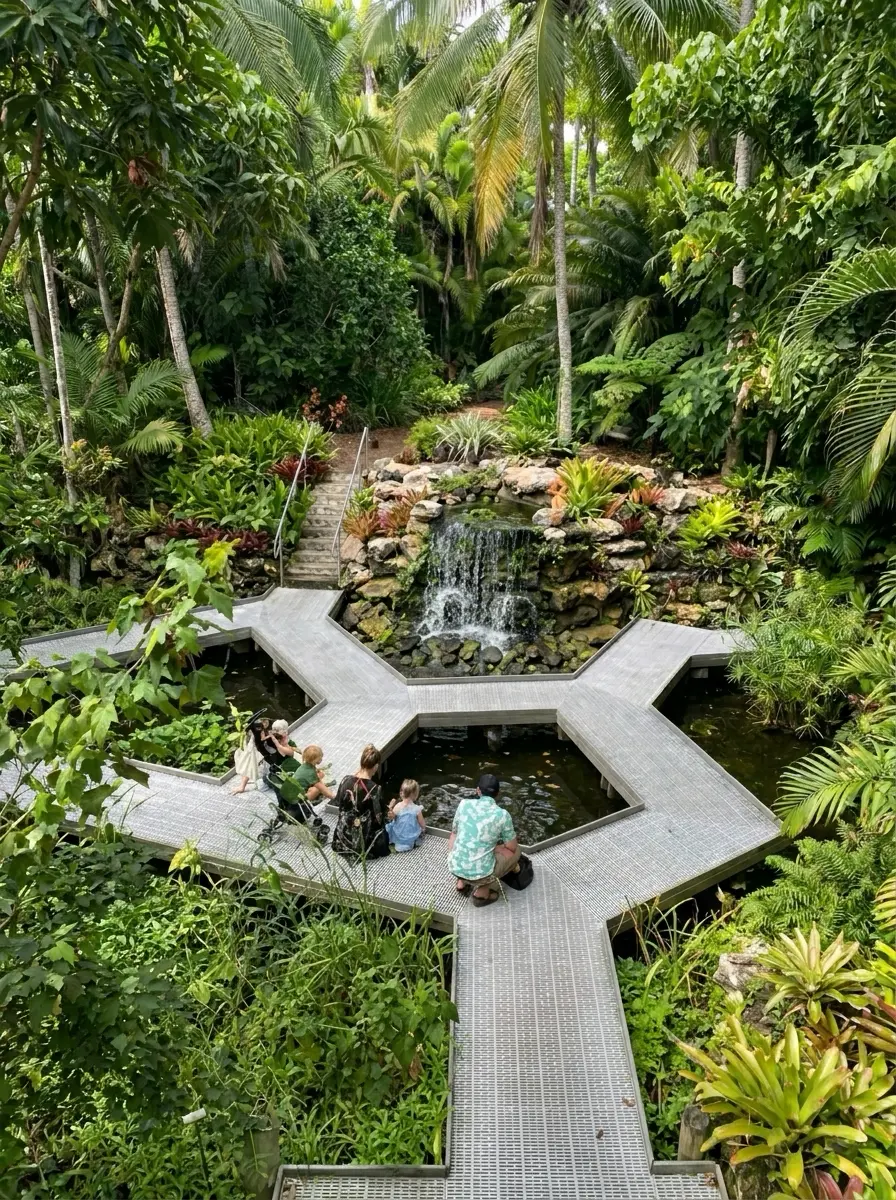
From Visitor to Designer: The Mindset Shift
Replicating the professional, lush aesthetic of a botanical garden like Mounts Botanical Garden in your own backyard is entirely possible. The key is to shift your perspective from “decorator” to “designer,” and to start treating the garden as a living classroom rather than just a place to visit.
Most people walk through a botanical garden and experience it emotionally: it feels lush, it feels cohesive, it feels effortlessly beautiful. What they are actually responding to are deliberate horticultural decisions made by trained designers. Plant selection, structural layering, grouping strategies, soil preparation, and site-specific placement all combine to create that feeling. None of it is accidental, and none of it is beyond a motivated Florida homeowner.
Mounts Botanical Garden in West Palm Beach is one of the finest resources available to Palm Beach County and South Florida gardeners, not just as a destination but as a working demonstration of what Florida-appropriate horticulture looks like at its highest level. Every plant you see thriving there has been selected because it works in this climate. Every composition you admire has been built using principles you can apply at home. This guide shows you how.
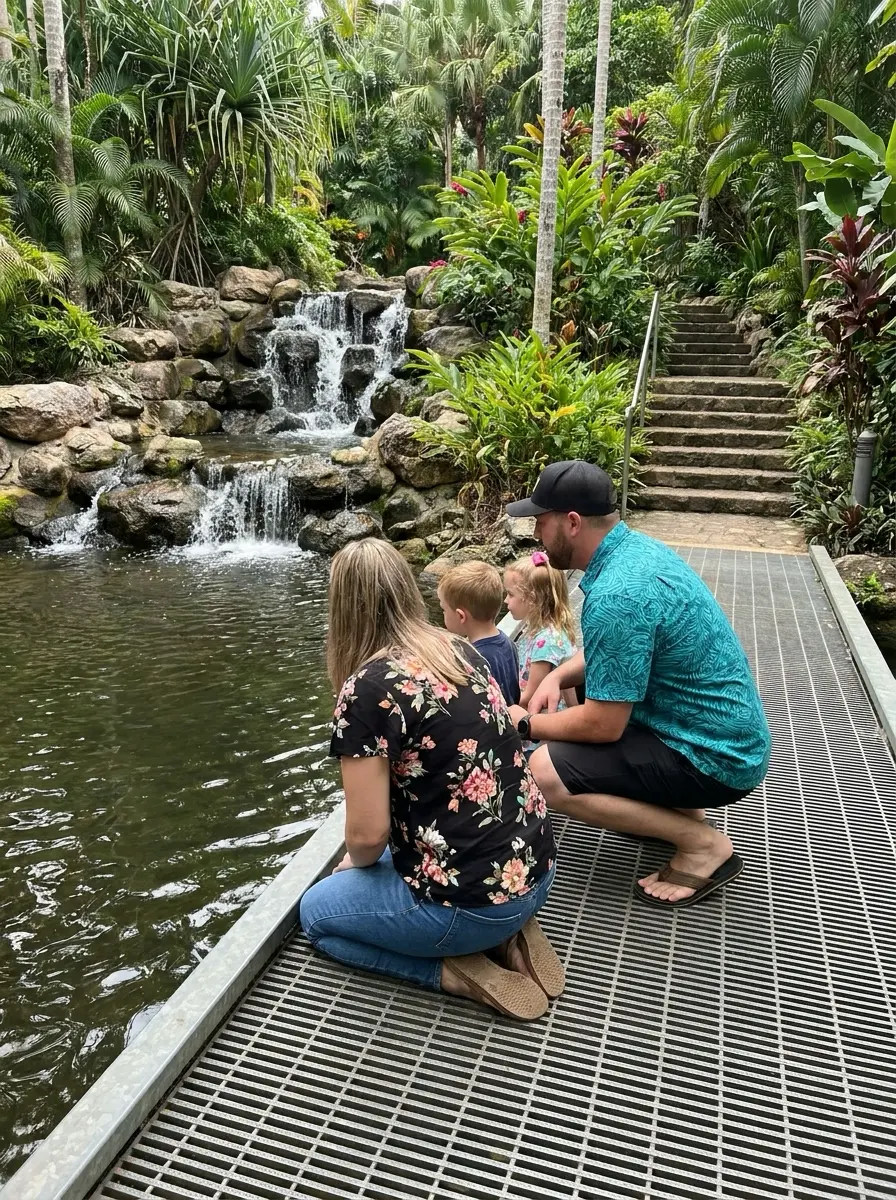
Treat the Garden as Your Living Classroom
Most botanical garden visitors walk the paths admiring the scenery. The ones who come away with genuinely useful knowledge walk the paths asking questions. The next time you visit Mounts Botanical Garden, bring a phone or a small notebook and shift your focus from passive appreciation to active observation.
Mounts Botanical Garden has already done the most difficult part of Florida landscape design for you: it has tested, selected, and demonstrated the plants that actually thrive in South Florida’s specific combination of heat, humidity, sandy soil, and seasonal rainfall patterns. You are not guessing. You are reading the results of decades of professional horticultural research displayed in living form.
Observe Plant Groupings
Notice how plants are arranged in relation to each other. Are they grouped by height into distinct layers? Are taller species providing dappled shade for smaller ones below? Are there repeating plants that create visual rhythm across a bed? Botanical garden compositions are rarely accidents.
Note Sun and Shade Conditions
Pay attention to which plants are placed in full sun versus partial shade versus deep shade. Florida’s afternoon sun is significantly more intense than the same sun exposure in northern states. A plant labeled “full sun” in a northern nursery catalog may need afternoon protection here.
Photograph and Identify
Use a plant identification app like iNaturalist or PlantNet to identify plants you want to replicate at home. Most botanical gardens also label their specimens directly. Capture both the plant and its label together so you have the scientific name for accurate research later.
Record What Is Thriving
Lean toward the plants that look the most vigorous with the least visible maintenance. In a well-managed botanical garden, a plant that looks spectacular is a plant that is genuinely well-suited to those conditions. It is a far more reliable guide than any catalog description written for a national audience.
Perform a Site Audit
The biggest mistake Florida homeowners make when redesigning a garden bed is selecting plants before understanding their site. A plant that performs beautifully in the Rain Garden section at Mounts Botanical Garden might struggle in your front yard if your specific conditions differ. Before a single plant goes in the ground, you need to understand three things about your property: sun, soil, and drainage.
Map Your Sun Exposure
Track your yard or planting area at three points during the day: 9 AM, 12 PM, and 4 PM. Mark which areas receive full sun (6 or more hours of direct sun), partial sun (3 to 6 hours), and shade (under 3 hours). Florida’s afternoon sun from roughly 1 PM onward is significantly more intense and hotter than morning sun, which matters for plants sensitive to heat stress. A spot that feels pleasant in the morning can be brutal by 2 PM.
Do this on a clear day, document with photosTest Your Soil
Florida’s dominant soil type is sandy, low in organic matter, and poor at retaining both water and nutrients. But conditions vary by neighborhood, elevation, and history of previous landscaping. A basic soil test tells you your current pH, nutrient levels, and organic matter content so you can amend specifically rather than guessing. Your county’s UF/IFAS Extension office offers soil testing for a minimal fee, with results interpreted specifically for Florida conditions.
Test before amending, not afterCheck Drainage
Stand in your proposed planting area after a typical Florida afternoon rainstorm and observe what happens. Does water drain away within 30 minutes? Does it pool for an hour or more? Does it sit for several hours? Florida’s heavy, concentrated rainfall can overwhelm flat or compacted areas. Most ornamental plants will develop root rot if their roots sit in standing water regularly. Drainage problems are easier to solve before planting than after.
Observe after a real rain event, not a sprinklerNote Wind and Microclimate
Florida properties near the coast, near open water, or exposed on corner lots experience significantly more wind than sheltered interior yards. Wind accelerates moisture loss from both soil and plant leaves, and salt-laden coastal wind can damage plants not rated for salt tolerance. A sheltered corner against a wall or fence creates a warmer, more protected microclimate that can support plants that would struggle in the open yard a few feet away.
Identify sheltered spots for sensitive plantsApply the Layering Principle
If there is a single design principle that separates a botanical garden composition from a random collection of plants, it is layering. Every professional landscape that reads as “lush” or “intentional” or “resort-like” is built on the same structural logic: tall elements anchor the space, mid-level elements create privacy and mass, and low-growing elements finish the ground plane. This approach mirrors the natural structure of a Florida woodland and is why it looks right to the eye.
The Anchor
Native Trees and Large Shrubs
The tallest layer provides structure, scale, and shade that defines the entire garden space. In Florida, native canopy choices include Live Oak, Southern Magnolia, Dahoon Holly, and Pond Cypress. These anchor the garden visually and create the protected microclimate that allows the layers below to thrive.
The Massing
Shrubs and Mid-Level Flowering Plants
The middle layer creates density, privacy, and visual interest between ground level and the canopy. This is where most of the seasonal flowering happens in a Florida garden. Group plants in masses of the same species rather than alternating different plants, which creates the drifted, intentional look seen at botanical gardens.
The Finish
Perennials and Low-Growing Plants
The ground layer covers bare soil, retains moisture, suppresses weeds, and ties the entire composition together at eye level when viewed from a seated or standing position. In Florida, native groundcovers are preferred because they tolerate the wet-dry cycles without irrigation once established.
Group plants in odd numbers: 3, 5, or 7 of the same species rather than planting one of everything. This creates what designers call a “drift” effect, where masses of a single plant sweep naturally through the bed. Even-numbered groupings tend to look arranged and formal. Odd-numbered drifts look intentional but organic, which is exactly the effect you see at a great botanical garden.
Solve Common Florida Struggles
Florida’s climate is one of the most rewarding for year-round gardening and one of the most challenging to manage without the right approach. These are the four issues that trip up most Florida homeowners, and the professional-grade solutions for each.
| The Challenge | Why It Happens in Florida | The Professional Solution |
|---|---|---|
| Sandy, Nutrient-Poor Soil | Florida’s Entisol soils are coarse-grained and drain so rapidly that water-soluble nutrients leach away before plant roots can absorb them. | Stop fighting the soil: choose native and Florida-adapted plants already suited to well-drained sandy conditions. For beds requiring richer soil, amend with finished compost at 3 to 4 inches worked in before planting. Use slow-release organic fertilizers that feed over weeks, not days. |
| Irrigation Inefficiency | Overhead sprinkler systems wet foliage rather than roots, promoting fungal disease in Florida’s high-humidity environment and wasting significant water to evaporation. | Install a drip irrigation system or soaker hose network that delivers water directly to the root zone. Pair with a timer set to run in the early morning only. This reduces fungal pressure, cuts water consumption, and delivers moisture where it is actually needed. |
| Weed Pressure and Soil Moisture Loss | Florida’s year-round warmth and abundant sunshine means weed seeds germinate continuously, and bare sandy soil loses moisture rapidly between rain events. | Apply 2 to 3 inches of organic mulch (pine bark, melaleuca, or eucalyptus mulch) across all planting beds. This mimics the natural forest floor, insulates roots from temperature extremes, retains soil moisture, and suppresses weed germination simultaneously. See our full guide on weed control for Florida lawns and beds. |
| Chemical Dependency Cycle | Non-native plants chosen for appearance rather than climate suitability require constant fertilizer, irrigation, and pest management to survive Florida conditions. | Replace high-maintenance non-native plants with drought-resistant Florida natives. Once established, these plants require minimal supplemental water or fertilizer and naturally resist local pest pressure, breaking the chemical dependency cycle entirely. |
Implementation Strategy: How to Actually Get It Done
The fastest way to fail at a garden transformation is to try to do all of it at once. Wholesale redesigns attempted in a single weekend almost always result in stressed plants, overwhelmed homeowners, and a yard that looks half-finished for months. The approach that professional landscape designers use is deliberate, phased, and prototype-driven.
Choose One Starter Zone
Select a single, contained area of your yard as your prototype: an entryway bed, a corner along a fence line, or the strip between the driveway and the front door. It should be small enough to complete in a weekend, visible enough to motivate you, and representative of your broader yard conditions. This is your proof of concept. If it works, you have a replicable template. If something does not work, you learn it on a small scale rather than across the entire property.
Document Everything
Keep a simple garden journal, even just a phone notes file with photos. Record what you planted, where you got it, when you planted it, and how it performs each season. If a plant thrives, note the conditions: soil type, sun exposure, how much water it received. When you are ready to expand the palette to other areas of your yard, this documentation tells you exactly what to replicate and what to avoid.
Expand What Works, Replace What Does Not
At the end of your first full season, review your starter zone honestly. The plants that are thriving without significant intervention are your core palette. Order more of those. The plants that required constant attention, struggled with pest pressure, or simply did not establish well are not suited to your specific microsite. Replace them with something better rather than continuing to invest maintenance in a poor fit.
Use the Florida Master Gardener Program
The Florida Master Gardener Program trains volunteers through the UF/IFAS Extension to provide science-based, locally specific gardening advice to the public, at no cost. These are Florida residents with verified horticultural training and direct knowledge of your county’s specific conditions. If you are facing a pest problem, an unidentified disease, a struggling plant, or a design challenge, they are the most reliable and accessible resource available to you. Find your county’s program through your local UF/IFAS Extension office.
Return to Mounts with Better Questions
After your first season of hands-on gardening, a return visit to Mounts Botanical Garden will be a completely different experience. You will recognize plants you have grown. You will notice design decisions you were not equipped to see before. You will ask better questions of the labeled specimens and the staff. The garden becomes more useful to you the more experience you bring to it, which is the definition of a living classroom doing its job.
Your Florida Gardening Authority: UF/IFAS Extension
Frequently Asked Questions
Mounts Botanical Garden offers free admission on select days and charges a modest entry fee at other times. The garden also hosts regular events, workshops, and plant sales throughout the year that provide additional opportunities to learn from staff and volunteer horticulturalists. Check their website at mounts.org for current admission details, hours, and event schedules. Members of the Friends of Mounts Botanical Garden receive free admission year-round along with other benefits.
Mounts Botanical Garden hosts plant sales several times per year where you can purchase many of the species grown on site, including native and Florida-adapted plants not always available at large nursery chains. The UF/IFAS Florida-Friendly Plant List for your county also identifies local native plant nurseries that stock the species best suited to your area. Native plant societies throughout Florida maintain member nursery lists and often hold plant swaps that are excellent and inexpensive sources of locally grown, climate-adapted plants.
The ideal planting windows in Florida are fall (October through November) and early spring (February through March). Fall planting takes advantage of cooler temperatures and Florida’s dry season transition, giving plants time to establish their root systems before the stress of summer heat. Spring planting works well for faster-establishing species and gives you the full summer growing season ahead. Avoid planting new installations at the start of Florida’s rainy season in June through July, when intense heat and waterlogging stress can challenge even well-chosen plants in their first weeks of establishment.
The prototype approach described in this guide is specifically designed for the motivated homeowner without professional design experience. The principles of layering, odd-number grouping, and site-appropriate plant selection are not technically complex. They simply require observation, patience, and the willingness to start small. For large-scale redesigns, major hardscape elements, irrigation system installation, or protected wetland areas, consulting a licensed Florida landscape architect or certified horticulturalist is advisable. For the garden bed work described here, the UF/IFAS Master Gardener program provides essentially professional-level guidance at no cost.
Honest answer: two to three growing seasons for a single bed to look genuinely established and designed, and three to five years for a larger property transformation to look mature. This timeline surprises people, but it reflects reality rather than marketing. The good news is that a well-chosen, properly planted Florida garden looks significantly better each year with minimal intervention as native plants establish deep root systems and fill in naturally. The first season you are managing new plants. By the third season, the garden is managing itself.
“Mounts Botanical Garden changed how I approach every project I work on in South Florida. I remember my first real visit, not as a casual visitor but as someone trying to understand why everything looked so effortless. I spent two hours in the native plant garden alone, photographing labels and sketching how plants were spaced. That single visit gave me more practical knowledge than any book I had read up to that point. The layering, the plant combinations, the way light hits the canopy in the late afternoon and filters down through the understory, it is all there to see and study. I go back every time I am working with a client in Palm Beach County and I always leave with at least one new idea. If you live within an hour of this garden and have not visited with a notebook, you are leaving a lot of free knowledge on the table.”
Ready to Design Your Florida Botanical Backyard?
From native plant guides and soil amendment tips to layering strategies and Florida-Friendly landscaping ideas, explore the resources that help you garden smarter in the Sunshine State.
Explore Florida Landscaping Resources →